
Associated Training Programmes
Overview
Our Conflict Resolution Training helps ensure your staff feel safe in their working environment.
Conflict and violent behaviour not only affect staff personally, but indirectly have a negative impact upon the standard of service and the delivery of patient care. Participants will reflect on their own experience of conflict situations to develop understanding and strategies to reduce the opportunity for conflict and its consequences.
Associated Training Programmes
Why Conflict Resolution Training Matters
Most conflict at work does not start with violence. It starts with frustration, fear, long waits, misunderstandings or a breakdown in communication. Staff who can spot the early signs and respond calmly are far more likely to resolve a situation before it escalates.
That is why this course places communication at its centre. Delegates explore how verbal and non-verbal communication shape a conflict situation, why communication sometimes breaks down, and the conditions that help it succeed. The result is a team that feels more confident, and a working environment that is safer for staff and better for the people they care for.
Associated Training Programmes
Why Choose A to E for Conflict Resolution Training
A to E Training & Solutions is a clinical training provider with a team of subject matter experts who understand the pressures of healthcare and frontline work. Our courses outside the Resuscitation Council UK portfolio are internally quality controlled to ensure high educational standards, and as an organisation we hold Skills for Health Quality Mark accreditation.
Our Conflict Resolution Training is interactive rather than lecture heavy. Because participants reflect on their own experiences, the discussion is grounded in the real situations your staff face, not abstract examples.
Associated Training Programmes
Who Conflict Resolution Training Is For
This 4 hour course is suitable for anyone whose role brings them into contact with patients, service users, relatives or members of the public. It is especially relevant to healthcare staff, where conflict can directly affect the standard of service and the delivery of patient care.
It works well for clinical and non clinical teams alike, including reception, administration and support staff, who are often the first point of contact when someone is upset or frustrated.
Associated Training Programmes
What You Will Learn
Course content includes:
- The Security Management Director and Local Security Management Specialist or their equivalent
- Causes of conflict and its stages
- Personal experiences of conflict
- Verbal and non-verbal communication during a conflict situation
- The effect cultural differences may have in relation to communication
- Communication breakdown and conditions for communication to succeed
- Communication models in different levels of conflict
- Behavioural patterns of individuals during conflict
- Warning and danger signals and the possibility of physical attack
- Factors affecting conflict situations in decision making
- Keeping a safe distance in conflict situations
- Reasonable force
- Support for those affected by a violent incident
Associated Training Programmes
What to Expect on the Day
The session begins by placing conflict in context, including the roles of the Security Management Director and Local Security Management Specialist or their equivalent in your organisation. Delegates then look at the causes of conflict and the stages it typically moves through.
Reflection is a key part of the course. Participants share and consider their own experiences of conflict, which helps everyone recognise patterns in behaviour and see where a different approach might have changed the outcome.
The middle of the session focuses on communication: verbal and non-verbal signals, the influence of cultural differences, and communication models suited to different levels of conflict. Delegates also learn to recognise warning and danger signals that may suggest the possibility of physical attack, and why keeping a safe distance matters.
The course closes with reasonable force and the support available for those affected by a violent incident, so staff know how to look after themselves and their colleagues afterwards.
Associated Training Programmes
Part of a Wider Approach to Staff Safety
Employers have a responsibility to manage the risks their staff face at work, including violence and aggression. The Health and Safety Executive publishes guidance on work related violence that many organisations use alongside Conflict Resolution Training.
Where staff may also need to physically disengage from an aggressive person, our Breakaway Training adds practical self protection skills in a 3.5 hour session. For teams that may need to intervene, our 3 day PMVA Training covers prevention, de-escalation and safe holding.
Associated Training Programmes
Certification
Delegates receive a certificate on completion. We aim to issue all certificates within 5 working days of course completion, and in most cases we are able to issue them within 24 hours.
Associated Training Programmes
Where We Deliver Conflict Resolution Training
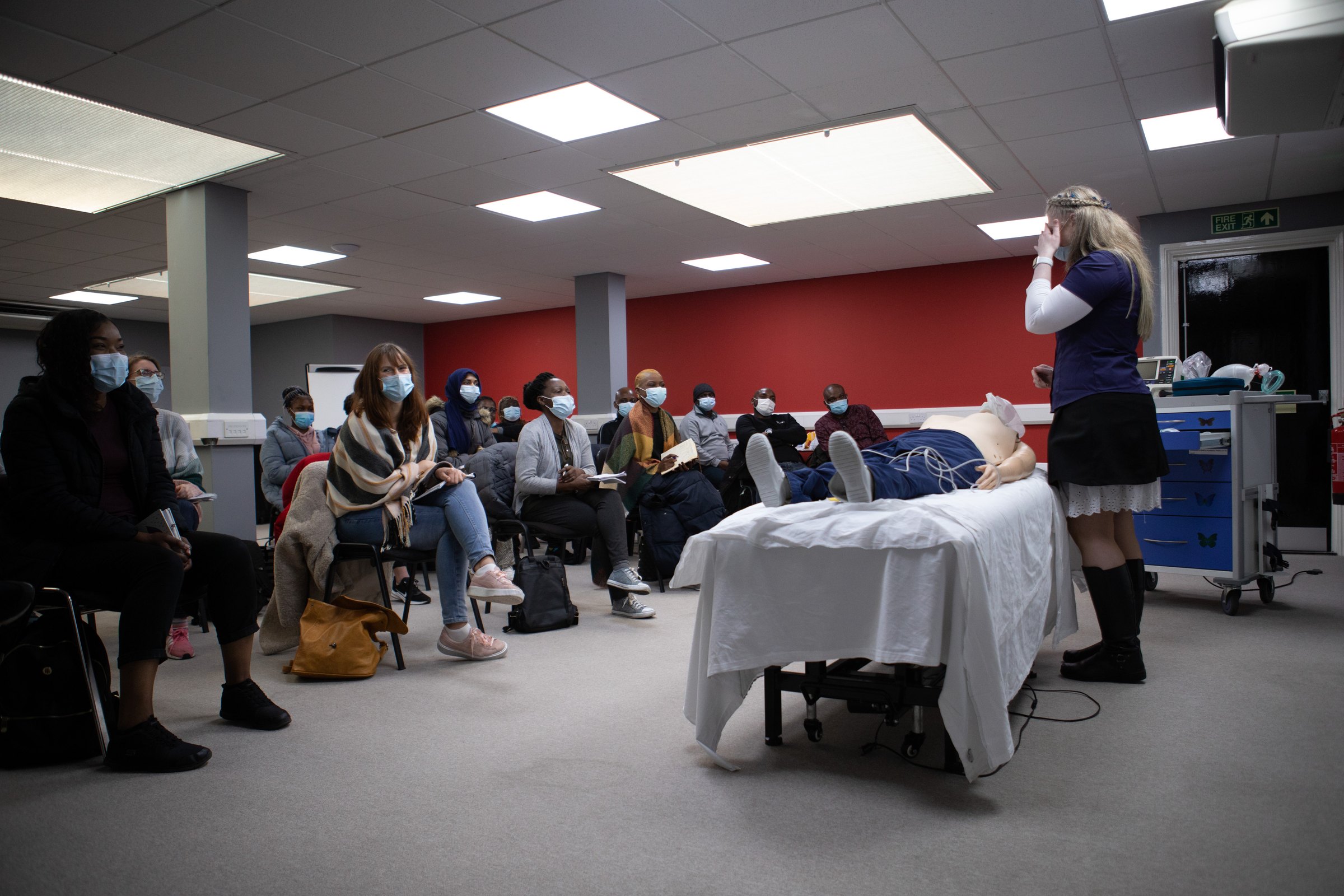
We have a dedicated training facility in Archway, North London. However, the vast majority of the training we deliver is provided at client sites across the UK. We can deliver Conflict Resolution Training at your venue as long as it is suitable for the course, and we can help you secure a venue if needed.
If you are travelling to our London course centre, there is a Premier Inn only a 5 minute walk away along with a number of other hotels nearby. The centre is around 15 minutes from Central London by Underground.
Associated Training Programmes
Group Bookings and Individual Places
We offer both group bookings and individual course spaces for courses running at our course centre in London. A group booking lets your team discuss real scenarios from your own workplace, and we would love to talk to you about your requirements.
Frequently Asked Questions About Conflict Resolution Training
How long is the Conflict Resolution Training course?
Does the course include physical techniques?
Is Conflict Resolution Training only for clinical staff?
Will I have to talk about my own experiences?
Does the course cover what happens after an incident?
Can the training be delivered at our premises?
Book Your Conflict Resolution Training
Help your staff feel safe, communicate with confidence and reduce the impact of conflict on patient care. Whether you need a single place or a half day session for your whole team, make an enquiry today and we will help you arrange Conflict Resolution Training that works for you.
"*" indicates required fields